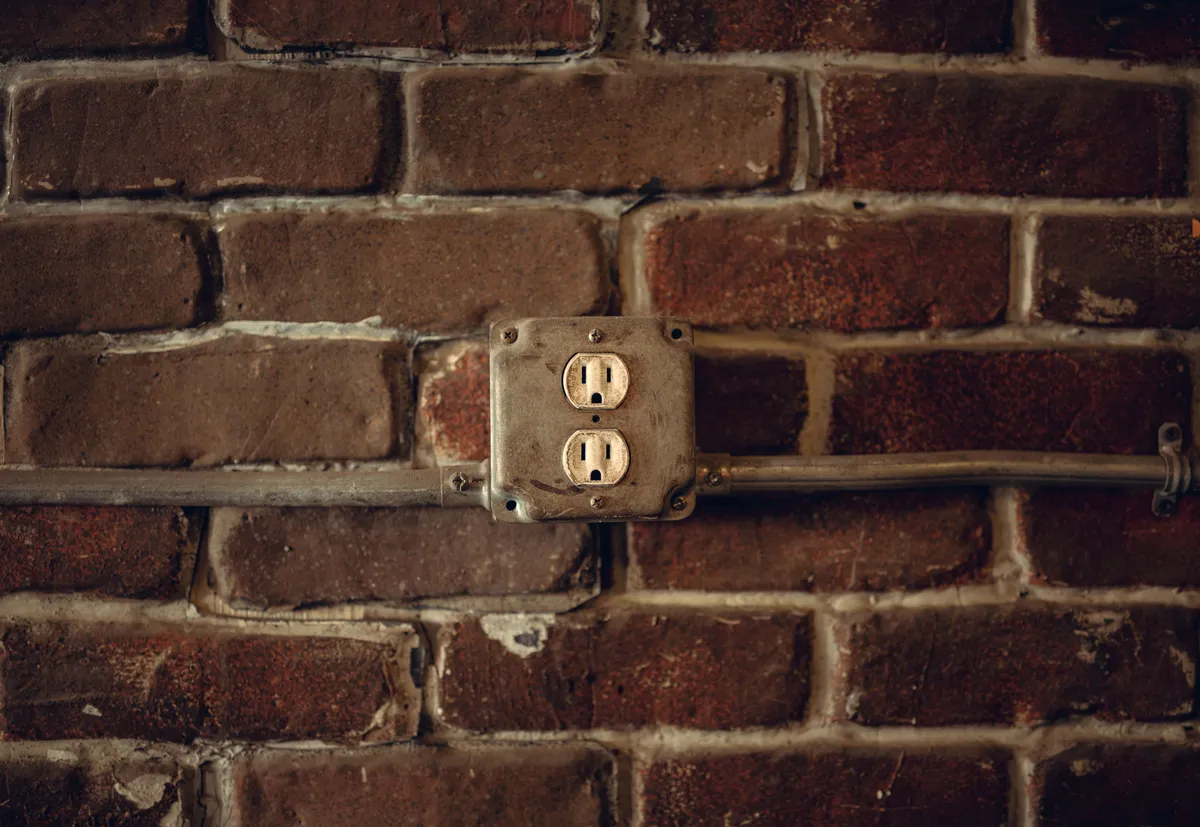
You go to plug something in — your phone charger, a lamp, the vacuum — and nothing happens. Your electric outlet stopped working, and the breaker panel looks completely normal. No switches flipped, no obvious problem. Maybe it’s just one outlet not working. Maybe you’ve checked around and realized several outlets stopped working at the same time. Either way, you’re probably asking yourself: why did my electrical outlet suddenly stop working?
If this is you right now, take a breath. This happens more than you’d think, and in most cases it’s not an emergency. But it’s also not something to just ignore and hope it fixes itself. Let’s walk through what’s actually going on.
If you’re in a hurry: check for a tripped GFCI first, check for a hidden wall switch second, and if you’re still getting no power at the outlet after that, the issue is likely a loose connection, a worn-out outlet, or a problem further back on the circuit — not something a breaker reset will fix. Keep reading for the full breakdown, or jump straight to when to call a professional.
This is the part that trips people up the most (no pun intended). A breaker’s only job is to shut off power when it senses a dangerous overload or a short circuit — a big, sudden surge of electricity. It’s not designed to notice a loose wire, a worn-out outlet, or a tripped GFCI somewhere else in the house.
So an outlet can go completely dead while the breaker sits there looking perfectly normal, because whatever’s actually wrong isn’t the kind of problem a breaker is built to catch. That’s not a fluke — it’s actually the more common situation than a tripped breaker.
Here’s something that surprises a lot of people: outlets in the same room, or even the same general area of the house, are often wired together in a chain, one feeding power to the next. Electricians call this “upstream” and “downstream.”
What that means for you: if something goes wrong at one outlet, every outlet wired after it on that same chain can go dark too — even if they’re in a totally different room. So if you’re wondering why your bedroom outlet died and somehow it’s connected to the hallway light switch, this is usually why.
This is also the difference between “just one outlet not working” and “several outlets stopped working at once.” If it’s just the one, the problem is often local to that outlet or whatever feeds it directly. If multiple outlets stopped working together, the cause is more likely further back on the shared circuit — which usually points toward a loose connection or a failing upstream outlet rather than anything wrong with the outlet you originally noticed.
A few usual suspects show up again and again:
Before you assume the worst, this is genuinely worth checking first — it solves the problem more often than people expect.
If you can’t find a GFCI outlet anywhere nearby, it might be tucked away somewhere less obvious, or the issue might not be GFCI-related at all.
Here’s the honest line we’d draw: checking and testing is safe for most homeowners. Opening up the outlet box and touching wiring is where it stops being a DIY project.
Safe steps you can take:
What we’d stop you from doing yourself: removing the outlet, touching the wiring inside the box, or trying to trace the circuit through the walls. That’s exactly the kind of job where “safely” and “yourself” don’t really go together — not because it’s impossible, but because a mistake there carries real shock and fire risk. If you’ve tried everything above and there’s still no power at the outlet, that’s your sign it’s time to call a professional rather than keep testing.
If you want to do a little more digging before calling anyone, here’s what’s genuinely useful to have on hand:
That’s about where we’d recommend homeowners stop. Testing whether an outlet has power is safe. Opening it up and rewiring anything inside the box is a different level of risk entirely.
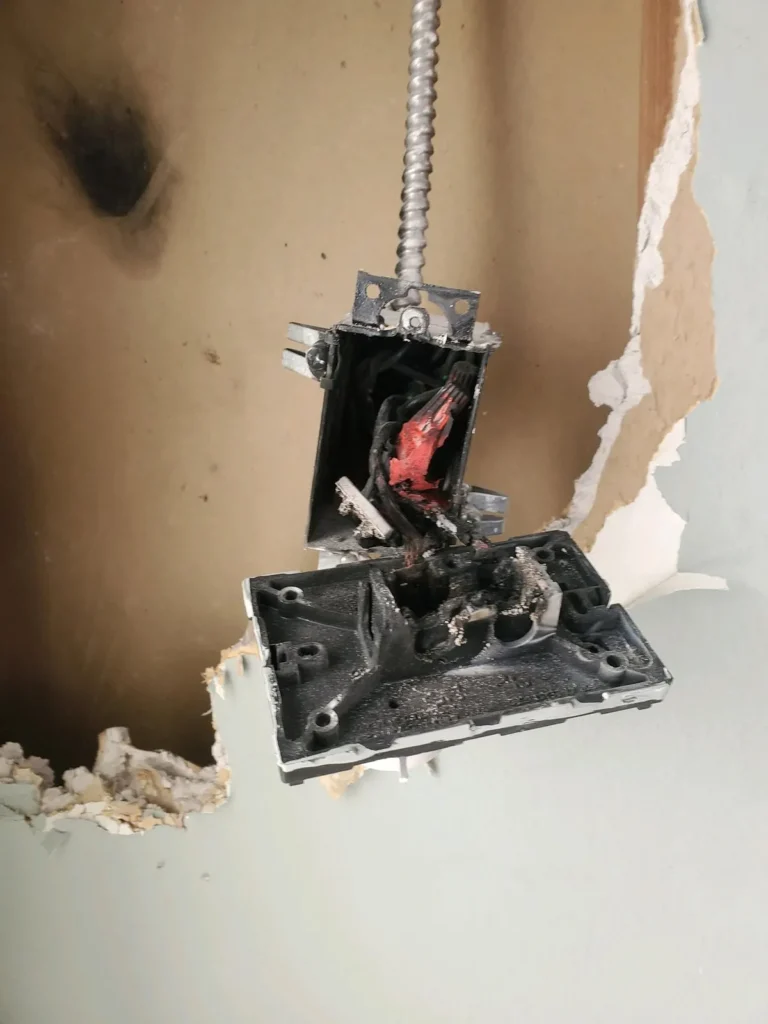
Most dead outlets are annoying, not dangerous. But a few warning signs mean it’s time to stop troubleshooting and call someone right away:
Any one of these means there’s real fire or shock risk behind that wall. Don’t wait on it.
Yes, and honestly, this is exactly the kind of job that’s quick for a professional but can turn into a headache if you try to chase it down yourself. A licensed electrician can trace the circuit, figure out exactly where the connection is failing (even if it’s not at the outlet you started with), and fix it safely and up to code.
This is one of those “it depends” answers, and we’d rather be honest about that than make up a number. A single, straightforward outlet swap is usually a small, quick job. But if the real problem turns out to be a loose connection somewhere upstream, damaged wiring behind the wall, or an outdated panel that’s not keeping up with everything you’re plugging in, the scope (and cost) changes.
The best way to know for sure is a quick look from someone who can actually see what’s going on — which is exactly what a service call is for.
If you’ve reset the GFCI, checked for a stray light switch, tested with another device, and the outlet is still dead — or if you noticed any of those warning signs above — it’s time to call in a professional rather than keep guessing.
Here’s what you get when you call us: a straight answer about what’s actually wrong, a fair quote before any work starts, and a repair done right the first time — no guesswork, no upsell, no surprises on the bill. And here’s what makes us different from a lot of electricians you’ll find searching online: we’re not a call center routing you to whoever’s available, and we’re not based an hour away pretending to be local. V. Detweiler Electric has been a real, family-owned electrical contractor headquartered right in Chalfont, PA since 2001 — licensed, insured (PA HIC# PA147212), and available 24/7 for exactly this kind of problem
Call (215) 431-4509 or Contact us, and we’ll get your power back where it belongs.
Why is my outlet not working if the breaker isn’t tripped?
Breakers only respond to overloads and short circuits — not loose wires, worn outlets, or tripped GFCIs. A dead outlet with a perfectly normal-looking panel is actually the more common scenario, not a rare one.
Can an electrician fix a dead outlet?
Yes. A licensed electrician can trace the circuit to find the real source of the problem — which isn’t always the outlet itself — and repair it safely and up to code.
How much does it cost to replace a non-working outlet?
It depends on the cause. A simple outlet swap is usually quick and inexpensive, but a loose connection upstream or damaged wiring can change the scope of the job. A quick inspection is the only way to know for sure.